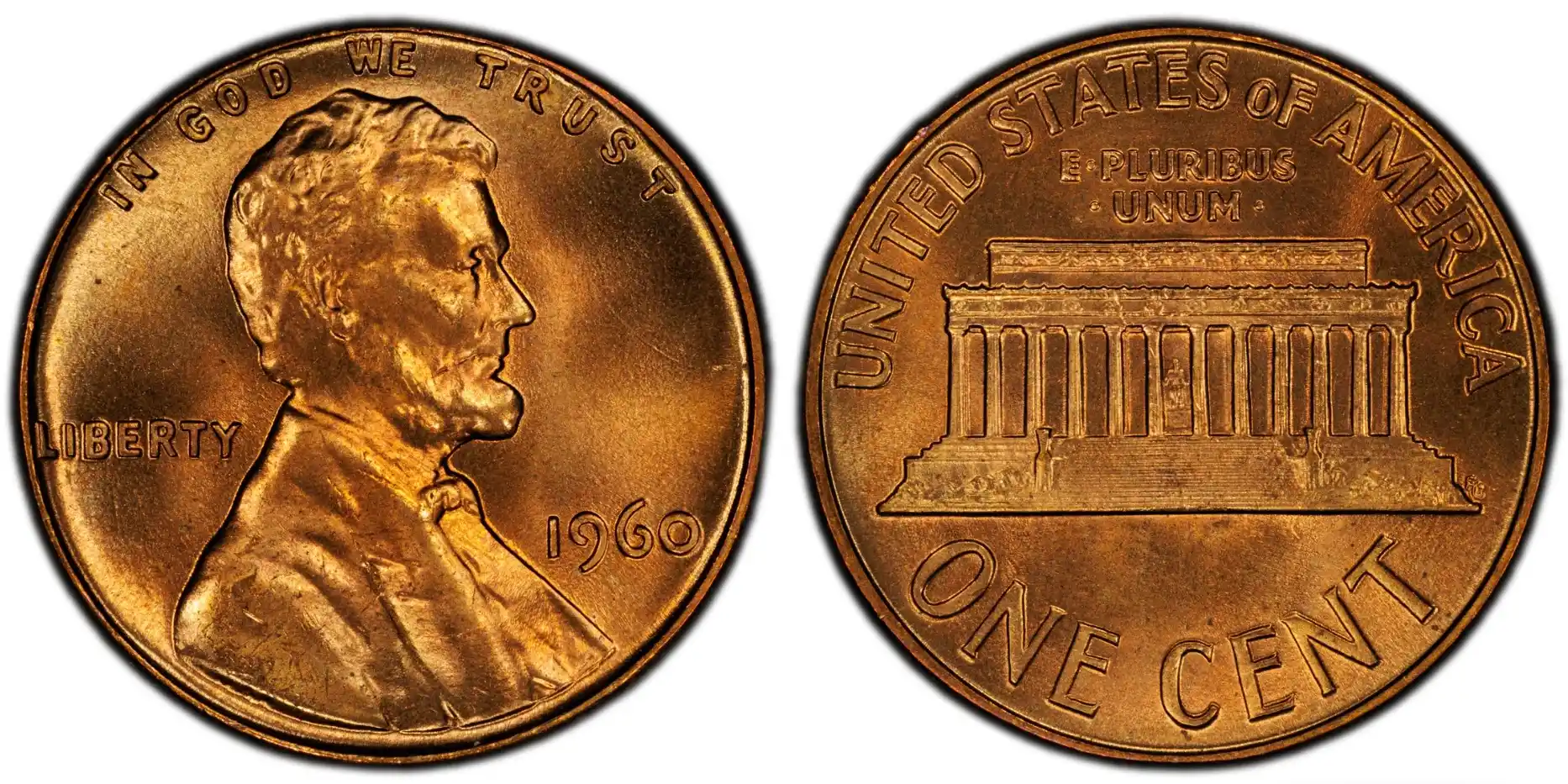
Standard 1960 penny items in condition below MS63 trade for $0.02-$0.05. This 1960 penny value confirms common status. Special varieties in MS65 grade show market value $10-$50.
Experienced traders monitor these items. Top grade MS67 examples fetch $500-$2500. Auction records show high profit potential for this coin type.
| Parameter | Value |
| Diameter | 19 mm |
| Mass | 3.11 g |
| Metal Composition | 95% Copper, 5% Zinc |
| Edge Type | Plain |
Price By Type
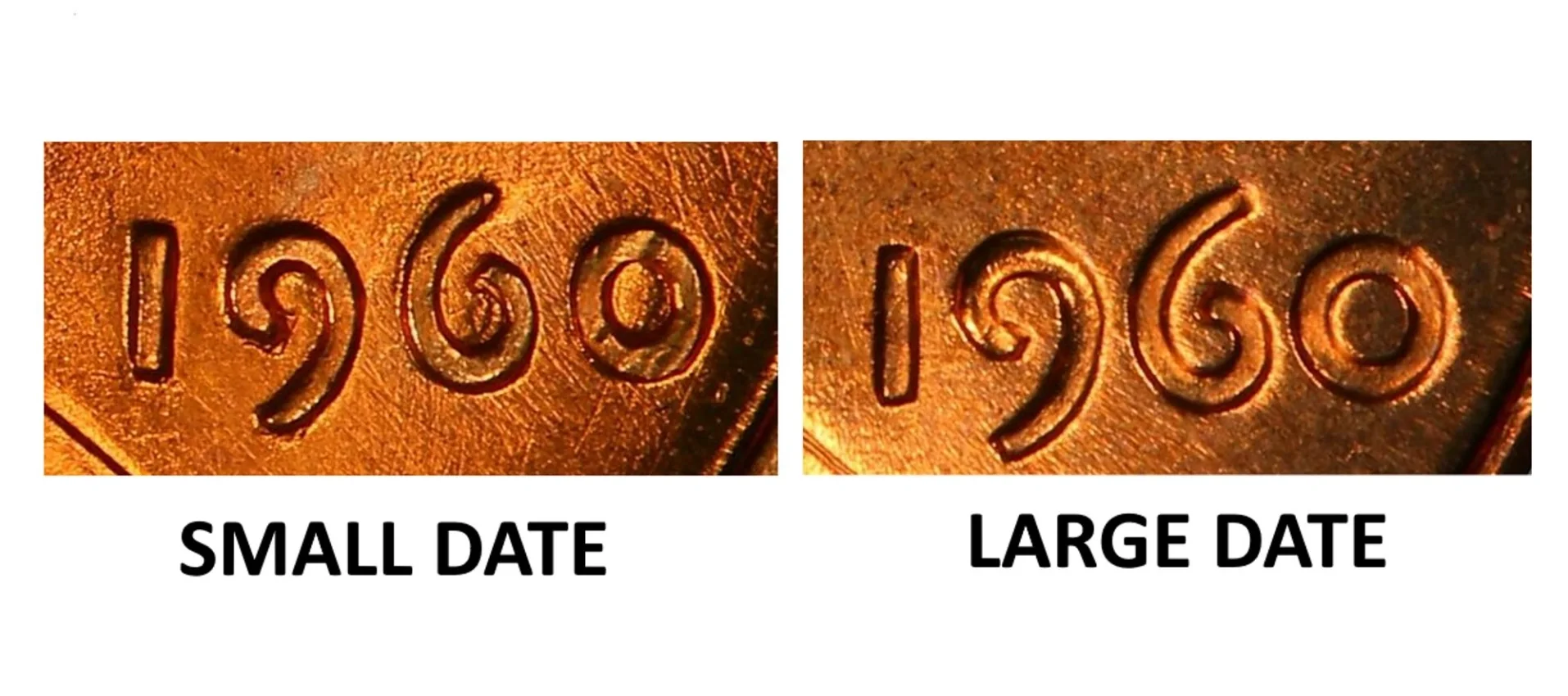
Small Date versus Large Date variations dictate final asset worth. Investors must distinguish between these two types.
Small Date
Date digits look small. Six top part and zero top part align.
- Circulation condition: $0.10-$0.50
- MS65 grade: $20-$100
- Proof 69 record price: $15000
Large Date
Date digits look large. Six top part sits above zero.
- Circulation condition: $0.02-$0.10
- MS65 grade: $5-$20
- Record auction price: $800
Preservation Effect On Financial Result
Clean surfaces without oxidation boost coin worth. Improper cleaning methods drop price 90%.
Factors Reducing Value
- Mechanical damage
- Chemical traces
- Heavy patina
- Surface scratches
Strategies For Price Protection
- Capsule storage
- Humidity control
- No skin contact
- Professional grading
Investment Potential
1960 coin investments require grade knowledge. Price growth between MS63 and MS66 equals 400%. Medium quality coin purchase carries low risk. Minimal income results from medium quality assets. MS67 grade search ensures high profit. High investment costs match high returns.
Error Types And Price
Double Die
Die doubling on obverse or reverse increases market interest. Price gain versus base coin ranges from 500% to 2000%.
Off Centre
Design shift versus blank center affects final worth. 10% shift means $5-$15 price. 50% shift reaches $100-$300.
Cud
Die break on coin edge changes value. $10-$40 range depends on defect size.
Price Change Analysis
1960 coin prices follow market trends. Data analysis during 2016-2026 shows specific patterns.
| Condition | 2016 Price | 2026 Price | Growth |
| MS63 | $2 | $4 | 100% |
| MS65 | $15 | $25 | 66% |
| MS67 | $300 | $600 | 100% |
Improper Storage Risk
Owners lose 80% price due to poor storage. PVC holders create green deposits. Copper surface damage happens fast. High grade potential drops after surface harm. Resale financial loss becomes critical.
Liquidity Tips
- Professional certification: Slab presence adds 30%-50% price.
- Type sorting: coin-identifier.com helps separate Small Date from Large Date.
- Bulk sales: MS63-MS65 coin set sales cut commission costs.
- Auction monitoring: Final result tracking helps adjust price expectations.
MS66 grade focus ensures maximum profit. Low quality coin lots minimize transport costs. Small Date versus Large Date sorting creates investment portfolio advantages.
Copper Assessment Nuances
- Color: Red tint (RD) worth is 50% higher than Red-Brown (RB)
- Luster: Original mint luster boosts worth 20%
- Scratches: Microscopic marks cut price 30%
- Oxidation: Any oxidation trace halves coin value
Investment Portfolio Management
Coin portfolios need strict organization. Penny investment requires focus on Copper quality. Profit maximization needs attention to detail.
Market Entry Strategy
- Buy low grade in bulk.
- Sell high grade individually.
- Monitor daily auction closing prices.
- Track Copper market metal price.
Detailed Grade Analysis
Grade MS60 represents base condition. MS63 adds 200% value. MS65 jump shows 1000% gain. MS67 rarity creates price ceiling. Investors prioritize MS65-MS67 range.
Error Coin
Investors search for error coins. Double Die coins offer fast capital growth. Off Centre coins attract niche buyers. Cud varieties show constant price stability.
Financial Forecasting
Market data suggests upward price trends. Copper rarity increases demand. 2026 investment landscape favors high grade coins.
Percentage Growth By Grade
- MS60-MS63: 50%
- MS63-MS65: 150%
- MS65-MS67: 300%
Risk Assessment
- Market saturation: Low
- Liquidity: High
- Investment duration: Long-term
Advanced Storage Methods
Capsule usage prevents air exposure. Silica gel packs reduce moisture levels. Dark storage places protect Copper luster.
Holder Types
- Cardboard 2×2: Cheap storage.
- Plastic slabs: High security.
- PVC-free flips: Long-term protection.
Profit Maximization Tactics
Experienced investors use specific tactics. Bulk purchases lower acquisition cost. Individual high-grade sales optimize revenue.
Sales Channels
- Coin forums
- Online auctions
- Direct buyer networks
- Local trade events
Cost Reduction
- Combined shipping
- Private transaction
- Direct bank transfer
- Minimal commission services
Numismatic Knowledge Application
Successful investors possess technical knowledge. Coin date distinction impacts final ROI. Small Date rarity drives higher profit margins. Large Date abundance creates lower trade value.
Inspection Process
- Check date size.
- Inspect mint mark location.
- Check Copper surface tone.
- Evaluate strike quality.
Market Trend Watch
- Investor demand: Rising.
- Supply: Stable.
- Price volatility: Low.
Real World Investment Scenario
An investor buys 1000 coins. 950 coins show MS60 grade. 40 coins reach MS63. 10 coins reach MS65. High grade coins cover 1000 coin cost. MS60 coins provide a profit margin. This strategy mitigates risk.
Risk Management Logic
- High grade coins provide a profit floor.
- Low grade coins cover acquisition cost.
- Portfolio diversification protects capital.
Copper Material Facts
Copper coins require a specific environment. Humidity levels above 50% damage surface. Temperature spikes accelerate oxidation.
Environmental Control
- Climate room storage.
- Closed container use.
- Acid-free paper separators.
Final Investment Logic
Penny investment success requires consistency. Market fluctuations offer buying chances. 1960 penny stocks remain solid assets. High profit needs patience.
Future Outlook
- 2026-2030 price forecast: Growth.
- Collector interest: Stable.
- Rare variety scarcity: High.
Following these rules systematizes portfolio formation. Maximized financial results follow detailed coin analysis.